上门女婿
Warhammer 40,000 tie-in draws young donors, shows power of pop culture in public welfare_我的网站

A | 有82年历史的“中兴福州鱼圆·卤面”深受欢迎。(新加坡讯) 因咖啡店起租两倍,再加上第二代小贩兄妹年纪大、体力差,决定歇业退休,已经营82年的福州鱼圆和卤面档结束营业。新加坡位于红山一带石叻道第148座咖啡店的“中兴福州鱼圆·卤面”周日(8月25日)最后一天营业。
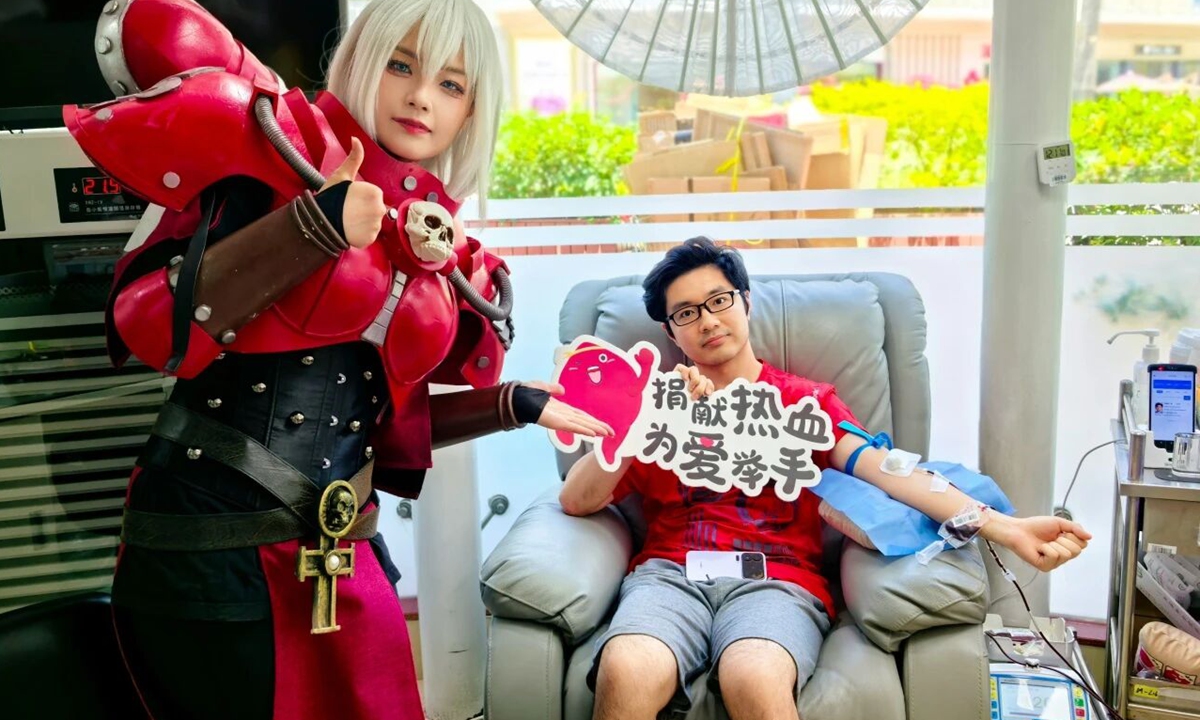
A blood donor poses together with a cosplayer dressed as a Sister of Battle from Warhammer 40,000. Photo: Official account of the Shanghai Blood CenterFor a few hours, the Shanghai Blood Center looked more like a fan convention than a medical facility.
Cosplayers in brightly colored power armor, carrying replica weapons, posed in front of displays featuring quotations and insignia from Warhammer 40,000, which is regarded as one of the world's best-known miniature wargames. Fans gathered around them for photos, creating the atmosphere of a franchise meet-up.
But the visitors had not come simply to meet fellow enthusiasts. Many had traveled from across China to roll up their sleeves and donate blood, drawn by the chance to take home a Warhammer-themed model.
The unlikely crossover reflects a broader effort by Chinese blood centers and public welfare organizations to reach young people in a language they recognize. By collaborating with popular international and domestic franchises, these organizations are making traditionally solemn causes more accessible - and, in this case, turning online enthusiasm into first-time blood donations.
Toys for lifeFrom July 24 to August 2, the Shanghai Blood Center held a campaign allowing people who donated whole blood at designated sites to enter a prize draw for Warhammer 40,000-themed figures and models.
The prizes ranged from giant 1:18-scale Knight Titans - towering war machines in the franchise's fictional universe - and Primarchs, its superhuman military leaders, to standard Space Marine figures.
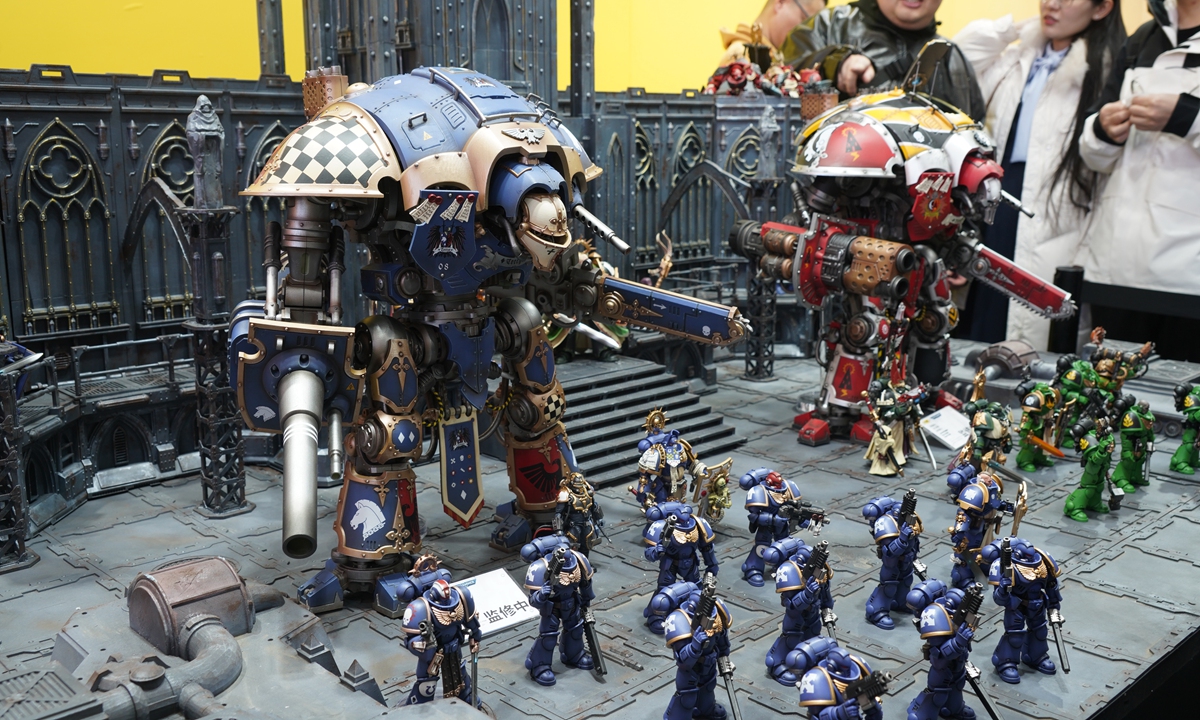
A Warhammer 40,000-themed model display at the Wonder Festival 2023 Beijing File photo: VCGThe crossover quickly became a topic of discussion online. According to the center, posts related to the campaign drew millions of views on Chinese social media platforms Weibo and Xiaohongshu (rednote) within three days, alongside a surge in user-generated posts and shares.
At three designated blood donation sites, the combined number of donors reached 256 in a single day, said the center.
The response was particularly notable because Shanghai had experienced consecutive days of high temperatures, which reduced pedestrian traffic and affected street-based blood collection.
With some models distributed faster than expected, the center held another round of the campaign on August 8 and 9.
The campaign appears to have reached the audience it was designed to attract. Zhu, 25, who donated blood in Shanghai on August 1, told the Global Times that his interest in Warhammer was the main reason he joined the campaign.
"I had never donated blood before taking part in this event," Zhu said.
Zhu lives outside Shanghai, as did many participants he met at the site. Some had traveled from the neighboring provinces, while others came from even farther away, largely because of the Warhammer models.
"Close to half of the donors on site that day were giving blood for the first time, and they were also Warhammer fans," Zhu said.
The campaign was neither an isolated experiment nor the center's first attempt to use pop culture to engage potential donors. According to the Xinhua News Agency, the Shanghai Blood Center began exploring IP collaborations in 2014 and has more than a decade of experience in such campaigns.
Pop culture for public goodChina's voluntary blood donation rate has reached 11.4 donors per 1,000 people, Gao Guangming, deputy head of the Department of Medical Emergency Response under the National Health Commission, said at a press conference in June 2025.
"Over the past two years, voluntary blood donations have declined globally due to multiple factors. In China, the accelerating aging of the population, changes in lifestyles, and overlapping challenges in publicity, organization and mobilization have left the imbalance between blood supply and demand relatively pronounced," Gao said.
"Clinical demand continues to rise, while seasonal, regional and blood-type-specific shortages persist," Gao said.
As people aged 35 and under constitute the majority of blood donors, attracting more young people is crucial to sustaining voluntary blood donation.
"Using designer toys and popular products can make blood donation more approachable, increase its visibility and recognition among young people, and help remove psychological barriers," Zhang Yiwu, a professor at Peking University with an expertise in cultural studies, told the Global Times on Wednesday.
Young people are highly active on social media and more willing to share their experiences, meaning their participation can encourage others to follow, Zhang said. Attracting younger generations is therefore essential to the long-term development of public welfare causes, he noted.
Blood donation is not the only field in which Chinese organizations are using popular franchises to broaden public participation.
In March, One Foundation again collaborated with Twinkle Twinkle, a popular character owned by Chinese toy company Pop Mart, to raise awareness of the needs of people requiring special support. Volunteers and children with autism took part in an art activity at Pop Mart City Park in Beijing.
The Pokémon franchise also appeared in a ByteDance public welfare campaign in 2025, which called for greater attention to the treatment and rehabilitation of children with cleft lips and palates, according to Chinese media reports.
Yet the campaign's success also raises a longer-term question: whether enthusiasm generated by prizes can be converted into regular voluntary donations.
"If there are more Warhammer-related charity campaigns in the future, fans will continue to follow them with enthusiasm, and I would also consider participating again," Zhu said. "However, without rewards or other incentives, the actual participation rate may not be very high."
A Shanghai Blood Center staff member acknowledged the same challenge. "A themed event can quickly increase the number of blood donors, but the long-term security of a city's blood supply ultimately depends on a stable community of voluntary donors," said the staff member, according to Xinhua.
The lasting value of an IP collaboration, therefore, lies not simply in the immediate increase in donor numbers, but in whether it gives first-time donors a positive reason to return.
"The real significance of IP collaborations is to give young people an opportunity to walk into a blood donation site," Xinhua noted. "Through standardized services and a positive experience, they can develop an understanding of and identification with voluntary blood donation, ultimately moving from 'one-time campaign participants' to 'long-term contributors to public welfare.'"
。该面摊第二代负责人王雪英(68岁)忆述,父亲在20多岁时与母亲从福州漂洋过海到新加坡谋生,1942年开始在中国街的街边摆摊,卖起了正宗的福州鱼圆和卤面。后来,父亲生意越做越好,王雪英高中毕业后就到摊位帮忙,哥哥则在父亲1982年过世才回来卖面,一家人共同经营摊位,一做就是数十载。“当年忙起来,我一天要杀100公斤的鱼,店外排了长长人龙。”王雪英透露,“中兴福州鱼圆·卤面”总店曾经历三次搬迁,在1994年从中国街搬到中峇鲁,2010年才搬到现址。王雪英每天亲自备料与烹调。王雪英与丈夫、哥哥王远杰(70岁)数十年来每天清晨炉火大开,大家各司其职,王雪英夫妇负责备料煮面,哥哥则负责手打鱼圆。她看着如今已驼背的哥哥,感慨说:“做小贩真的不容易,我们都从年纪轻轻做到现在满身疼痛,我哥以前很帅的!”王雪英指,随著年事渐高,再加上咖啡店9月翻新后,负责人称即将涨两倍租金,从原本的2000多新元起租金至6000多新元,她就索性结束营业。“这里支持我们的都是老人家和老顾客,我不想起价。我们年纪也大了,是时候退休了,不舍得也没办法,非常感谢大家这些年来的支持。”王雪英称,目前与哥哥并未认真规划退休后的生活,只打算好好休息。等歇业后,他们会马上将摊位的厨具送出或卖掉,以及赶在结束营业前完成数百颗鱼圆的订单。

B |
Current article:http://a9dht7.cuntoujuefourantapai.cfd/list_bmj/zvxatw.html
Published on:00:00:00